
The Assumption Every St. John’s Family Eventually Makes
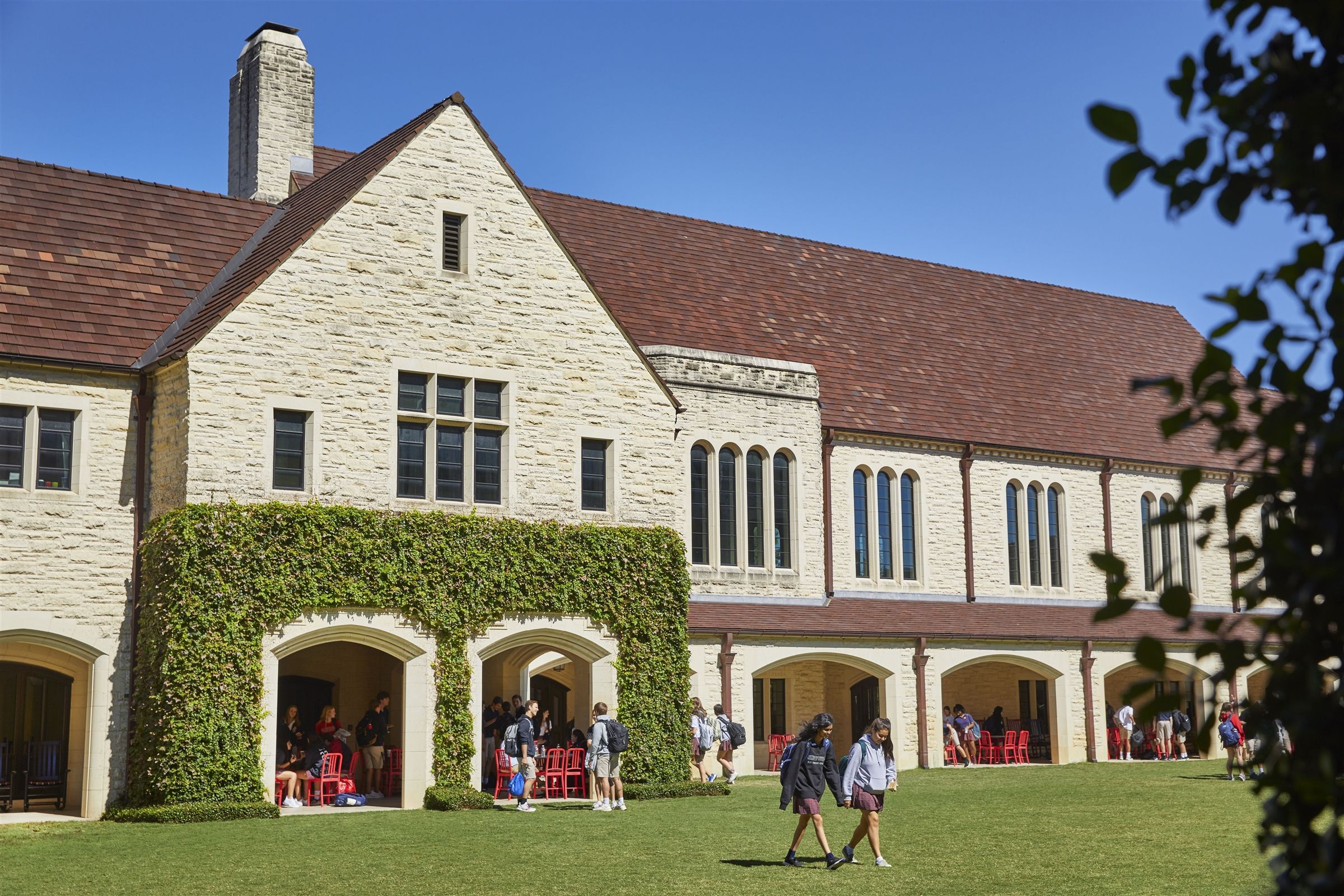
St. John’s School is one of the most academically respected independent schools in the U.S. The Upper School’s challenging curriculum, small and engaging classes, and the advisor system that starts the day a student enters ninth grade make St. John’s a fantastic option for Houston’s top students and families. The school has a college counseling office that has spent years building relationships with admission staff across the country. Chapel, community, a thirteen-year continuity that most schools can’t offer, none of that is in question.
What I hear, repeatedly, when speaking with high school students and families at St. John’s is this:
‘St. John’s is such a strong school, shouldn’t the college process basically take care of itself?’
It’s an understandable assumption. It’s also the single costliest one in terms of your child’s college admissions plans.
The amazing school on Claremont Lane, built around intense academic rigor and personal attention, does not always yield a custom college plan built for one specific kid. The gap, between the aggregate ideal of a St. John’s student and the complexity of the real college-bound teenager in front of me, is where I spend most of my time when working with SJS families at the Shumsky Center.
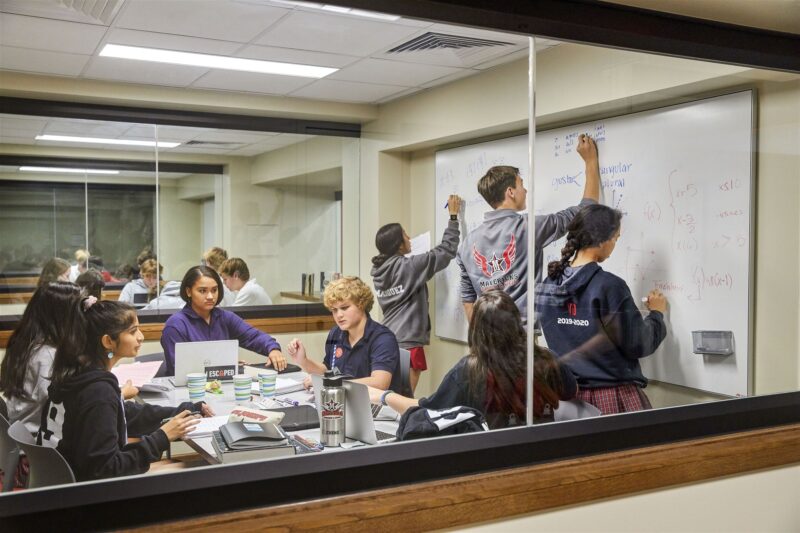
St. John’s is a small school by design. Approximately 700 students are enrolled in the Upper School at any given time, many of whom have been in the same classrooms together since kindergarten. That continuity is a genuine strength; teachers and advisors usually know these kids for a decade or more.
Why a School Built Around Personal Attention Still Produces Blind Spots
But a school this size, where identity gets set early and reputations are solidified by seventh or eighth grade, creates its own trap. A student who was labeled ‘the science kid’ or ‘the artist’ in Middle School often keeps building a transcript that fits that label all the way through senior year. No one steps in to check whether it still reflects who they actually are at seventeen. Colleges are reading applications from a student who has had thirteen years to develop; they do not care one bit about the student’s experience in first grade. Families rarely stop to ask whether the version of their child that St. John’s has known is in fact the correct version today.
The Advisor System Is a Head Start, Not a Finish Line
St. John’s assigns academic advisors starting in ninth grade and adds dedicated college counselors in eleventh. This is one of the real advantages of an SJS education, and a more structured system that starts earlier than at most other Houston private schools. Families sometimes assume the college planning work is handled perfectly and there is nothing more to do until the fall of senior year.
That assumption may not be backed by robust evidence. A St. John’s advisor is managing a full caseload across an entire grade, working within institutional relationships, processes, and boundaries that necessarily serve the whole school community, not any one family or student’s particular situation. They are good at what they do. They are also not positioned to spend dozens of hours helping one student figure out what they actually want to study, or to have the blunt, occasionally uncomfortable conversations that are sometimes necessary. The families who get the most out of St. John’s excellent college counseling are, in my experience, the same families who have done the deeper individual work on their own or with the support of an external professional.
Rigor For All Means College Admissions Departments Struggle to Differentiate Anyone
St. John’s has been named to the College Board’s AP School Honor Roll at the Platinum level and received the highest tier of recognition. This is only awarded to schools where a large share of students take AP exams and score well. That is a meaningful credential for the school. It is also, paradoxically, part of what makes individual differentiation more difficult for applicants from St. John’s.
When an admissions officer already expects outstanding AP performance from every SJS transcript that crosses their desk, top AP performance from a St. John’s applicant is no longer memorable. Such performance is now the expected price for consideration, not the differentiator. I see St. John’s students pour enormous energy into AP course selection and grade protection, treating the GPA as the most valuable product, when the more useful question is what that rigor was actually in service of. Academic performance matters much, yet it is not necessarily the performance, but what it reveals about how the student thinks, what they’re curious about, where they go when nobody is grading them.
A College List Built on Rankings Instead of Your Child
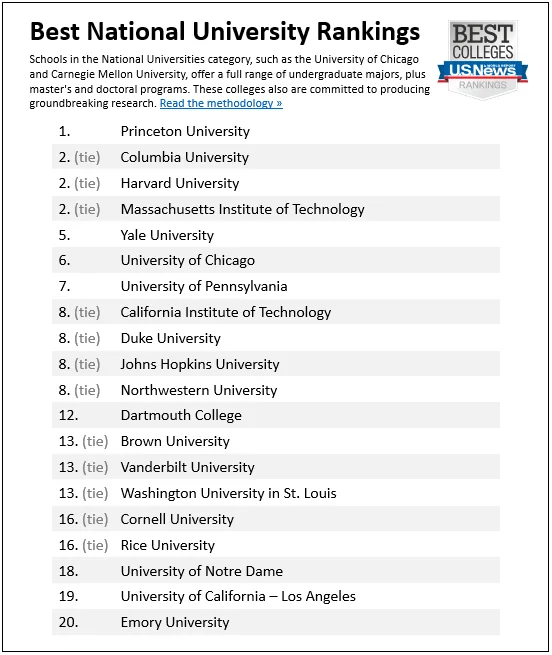
This same assumption, that a strong school produces a strong plan automatically, shows up most clearly in how St. John’s families build their college lists. I regularly see lists anchored entirely to U.S. News rankings, chosen to be at least as impressive as whatever the family down the street is targeting. The list becomes a scoreboard rather than well-thought-out strategy composed of the best fit schools.
I also see the opposite error: families who assume a Texas flagship is the safe, sensible default and never seriously research the dozens of excellent universities, Lehigh, Tufts, Case Western Reserve, University of Rochester, and many others, where a student with a specific academic interest might actually thrive. At these and dozens of others, the St. John’s student may further prosper because of the smaller classrooms with more faculty access than a 40,000+ undergraduate student public university may offer.
The correct approach begins with the student’s traits. A well-built list starts with a rigorous, honest inventory of who your child is, intellectually, socially, financially, emotionally, and works outward from there to the handful of schools that actually fit. It is slower and less satisfying than sorting by rank, and it produces dramatically better outcomes.
Faith, Virtue, and the Essay Colleges Have Already Read a Thousand Times
St. John’s builds its mission around developing the ‘whole person;’ service and character development are an essential element of an SJS education. It also means that several very specific essays show up in my office with predictable regularity: the service to the needy essay, the essay about the silver lining in the championship loss, or the bad grade that inspired my turnaround essay that reads like it could have been written by any high-achieving student at any private school in the country.
None of those experiences are the problem. The problem is writing about them the way everyone else does. Admissions officers who read applications from SJS and every other rigorous private school in the country have seen the generic essays cross their desks many times over. The student who writes with real specificity and self-knowledge about a small, honest, even unglamorous moment, and not the polished version of themselves, but the unspectacular one, is the student who is remembered. Finding that essay takes real work, and it rarely comes with the first draft, or without someone pushing back on the safe version.
What Actually Changes Outcomes for St. John’s Families
The families I work with who navigate this well don’t do anything mysterious. They start in ninth or tenth grade, while there is still time to make real choices rather than damage-control ones. They stop treating rankings and neighborhood comparisons as inputs to the college list. They ask their child hard, specific questions about what they actually love and find meaning and satisfaction in, not the choice that they think will sound good in an interview. And they bring in expert independent guidance that works only for their family, a professional with the time, distance, and freedom from institutional constraints that no school-based advisor, however skilled, can offer, given their full caseload.
Frequently Asked Questions from St. John’s Families
Why would we hire an independent college counselor if our child already attends St. John’s?
St. John’s college counseling serves the whole grade and operates within the school’s institutional relationships and processes. An independent advisor works exclusively for your family, with more individual time and no institutional constraints, a valuable complement to the school’s program, not a competitor.
When should St. John’s families start college planning?
Ninth or tenth grade, while there is still time to shape course selection, build genuine extracurricular depth, and do the self-assessment work that a strong application depends on, well before the college list and essays become urgent in eleventh grade.
Does a high SAT or ACT score matter less for St. John’s applicants specifically?
St. John’s students post SAT scores well above national norms, which is exactly why a high score reads as a threshold rather than a differentiator at selective colleges. The high score gets an SJS application into consideration, but essays, extracurricular depth, and academic focus are what separate one strong applicant from another.
We Have Advised Houston Families, Including Many at St. John’s, Since 1987
The Shumsky Center has worked with St. John’s students alongside families from Strake Jesuit, The Awty International School, Second Baptist, Episcopal High School, The Kinkaid School and other Houston independent schools for nearly four decades. Some students arrive certain of their plan and discover, in the course of honest conversation, that the plan was built on assumptions nobody had tested. We help build the version that is authentic to the student.
I have also worked with St. John’s students navigating real academic or personal struggle, helping them find colleges and programs where they can succeed on their own terms. There is no single model of success I am trying to fit a student into, only a careful, honest process of figuring out what success looks like for them specifically.
If your son or daughter is a St. John’s School student and the college process is starting to feel more like a checklist than a plan, I would welcome the conversation.
The Shumsky Center for Academic and Career Performance
4299 San Felipe, Suite 210 | Houston, Texas 77027
713.784.6610 | info@shumskycenter.com | shumskycenter.com
College Admissions Consulting | Career Advising | Learning & Attention Disorders | Residential Placement