

By Hayden Shumsky | The Shumsky Center for Academic and Career Performance | Houston, TX
Every EHS Student I Meet Is a Different Puzzle
Episcopal High School fosters a close-knit student community. It’s a great school, one where a student can act in the fall play, start on a varsity team, take a rigorous course load, and be known well by the adults around them, even in one school year.
But when a family sits down with me at the Shumsky Center, the question is never ‘what does an EHS student need?’ It’s ‘what does this particular EHS student need?’ Two students from the same graduating class, with similar grades and similar activity lists, may need entirely different college plans. The actual work of the college admissions process isn’t matching a student to a prestige tier, it’s matching a specific, particular young person to the right major, the right kind of college, and the right community to spend four years in. That work starts with the student, not the school they attend.
Start With What’s Actually True About This Kid

Before any list of colleges gets built, I want to know things that have nothing to do with GPA. What is this student genuinely good at? I’m not only thinking of what he or she is academically rewarded for, but rather, what they are actually good at? Where do they struggle, and what do they need in place to do their best work: more structure or more independence, a small discussion class or a large lecture they can absorb at their own pace, a heavy course load balanced by unstructured time, or a lighter one that leaves room for depth in fewer things?
This is where a lot of families, many of the families at EHS included, skip a step. It’s easy to describe a student by their transcript and their activity list. It’s much more difficult, and far more useful, to sit with a student long enough to understand how they actually think, what kind of stress helps them perform and what kind shuts them down, and what they’re curious about when no one is grading them. A student who thrives in Episcopal’s small, well-supported classrooms might do best at a college with a similar scale and structure. It is equally plausible that they might be more than ready to stretch into something bigger and more self-directed. There’s no default answer, and guessing wrong costs a student a rough freshman year, or worse.
Ambitions and Interests Aren’t the Same as ‘What Sounds Impressive’
Ask most eleventh graders what they want to study and you’ll get one of two answers: a confident, specific major that turns out to be based on very little real exposure, or an honest ‘I don’t know.’ Both are normal. Neither is a plan.
The students who end up genuinely excited about their college experience are the ones who did real exploration before senior year. Actual exposure is what counts here: a summer program, a research opportunity, a job shadow, a serious conversation with someone doing the work they think they want to do. A student who by default chooses ‘pre-med’ because it’s the familiar, respected path, without ever testing whether they actually like day-to-day science and clinical work, is flying blind. What happens when they enroll in a challenging course like organic chemistry and come face to face with a major built on assumption rather than interest?
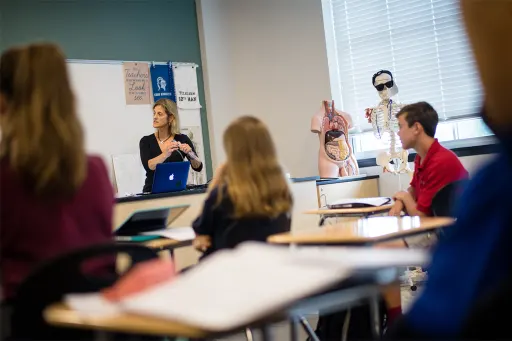
Identifying what a student is genuinely curious about is some of the most consequential work we do together. To be perfectly clear, we are not talking about what they think they should be curious about in order to receive adult or peer affirmation. Critically, this must happen before the college list, not after.
Choosing a Major Means Understanding the Actual Program, Not Just the Name
Once a student has a genuine sense of their interests, the harder and more specific work begins: understanding what a given major actually looks like at a given school. ‘Business’ at one university means a rigid, pre-professional four-year sequence; at another, it means broad flexibility with electives across the university. ‘Psychology’ can be a heavily research-oriented lab science at one school and a more clinically-focused, applied program at another. Two colleges can offer the same major on paper and deliver almost entirely different experiences.
My clients look into the actual course requirements, the faculty, the research opportunities, and the career outcomes for graduates of that specific program. An EHS student with a genuine interest in environmental science, for instance, needs a very different kind of program depending on whether their interest runs toward policy, field research, or engineering. That distinction changes which colleges belong on their list.
The Right College Model Isn’t Always the Familiar One
Episcopal students come from a small, personal, tightly-knit environment, and I see two common but opposite mistakes in their thinking. Some families assume their student needs to replicate that exact environment in college, another small, intimate campus, without asking whether the student has actually outgrown that structure and is ready for the anonymity and independence of a large research university. Others assume the opposite: that after four years of close supervision, total independence at a big university is exactly what their student needs, without examining whether that student actually does their best work with more structure and support nearby.
There is no universally right model: small liberal arts college, mid-size university, large research institution, a structured core curriculum versus an open one, urban campus versus a self-contained one. There is only the right model for this particular student, and figuring that out requires an honest look at how they’ve actually operated for the last four years, not just where they’d like to imagine themselves next.
Social Fit Matters as Much as Academic Fit
Families spend enormous energy on academic fit and remarkably little on social fit, even though social fit is very often what determines whether a student actually thrives once they arrive. Does this student do best around people similar to themselves, or does difference energize them? Do they need a built-in community a strong Greek system, a tight residential college structure, a religious or cultural organization? Or do they prefer to build their own social life from scratch? Is the surrounding city or town part of what they need, or an afterthought?
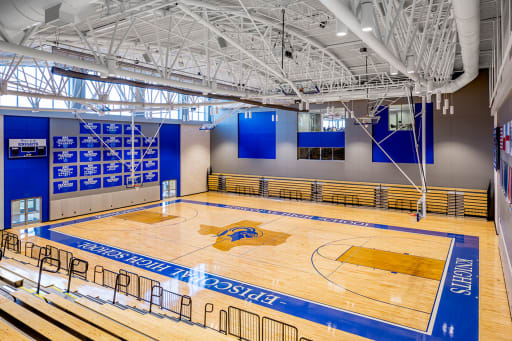
An EHS student who has spent four years in a small, values-driven community may specifically need that kind of built-in structure to feel grounded at college. Conversely, he or she may be genuinely ready to build something different from the ground up. Either can be right. What’s not right is picking a college based on its academic reputation alone and treating the social environment as something the student will simply figure out once they arrive. Plenty of students with strong academic fit transfer or struggle badly because nobody seriously examined whether they’d actually be happy there.
What This Looks Like in Practice
The families who get this right don’t skip straight to a college list. They start, often in ninth or tenth grade, with an honest inventory of the student in front of them: talents, real weaknesses, working style, genuine interests, and what kind of environment helps them do their best work. From there, we build outward: the majors and programs actually fit those interests, the college model(s) that fit how this student operates, and the social environment that is most comfortable. The list that comes out of that process looks different for every student, even two students from the same EHS graduating class, because it must.
Frequently Asked Questions from Episcopal High School Families
How do I know what kind of college is the right fit for my child?
Start with how your child actually operates and how much structure they need, how they handle stress, what kind of classroom setting helps them do their best work. The right size, structure, and setting follow from that, not the other way around. Do not begin with a list of college names.
How can I help my child choose the right major?
Real exposure beats guessing and a summer program, research experience, or serious conversation with someone in the field will tell you more than any assumption about what a major ‘should’ lead to. It’s also worth comparing how the same major differs in structure and focus from one college to another.
Why does social fit matter as much as academic fit in choosing a college?
A student can be academically well-matched to a college and still struggle if the social environment doesn’t suit them. Community structure, campus culture, and surrounding location all affect whether a student thrives, not just whether they’re admitted.
Should my EHS student look for a college similar in size and structure to Episcopal, or something very different?
It depends entirely on the student. Some students who’ve thrived in a small, personal environment are ready for more independence and scale; others do their best work with continued structure and close support. The right answer comes from an honest look at the individual student, not an assumption in either direction.
We Have Advised Houston Independent School Families Since 1987
The Shumsky Center has worked with Episcopal High School students alongside families from St. John’s, The Kinkaid School, Strake Jesuit, The Awty International School, Second Baptist, Memorial, and other Houston-area schools for nearly four decades. No two students we’ve worked with have followed the same plan, even when they came from the same school, the same grade, and had similar transcripts. Our plan was never really about the name of their high school. It was about them.
If you’d like help figuring out what your EHS student’s version of the right plan actually looks like, I’d welcome the conversation.
The Shumsky Center for Academic and Career Performance
4299 San Felipe, Suite 210 | Houston, Texas 77027
713.784.6610 | info@shumskycenter.com | shumskycenter.com
College Admissions Consulting | Career Advising | Learning & Attention Disorders | Residential Placement