Posts By: Hayden Shumsky

How to Use 11th Grade Wisely and Get In To Your Dream School


  1. Best Grades Ever: Every kid in America will hear from Mom and Dad about the need to do well in 11th Take it from me, you need to come ready to play every day. Push your grades in 11th grade to the best they’ve ever been.  That’s what admissions folks at top 150 colleges expect. If you need help, ask teachers for tutorials before or after school.  Get a tutor if you’re in danger of a C grade or lower.
  2.  

  3. Take Tough Courses, Especially in Areas of Interest: You do not need to take the entire AP curriculum, but you would be wise to challenge yourself with a tough, but not overwhelming set of courses.  Interested in STEM? Take that AP Physics or Calc offering.  Future social scientist? Push yourself with AP English and AP US History. Love Languages? Spanish IV, Chinese Honors, or IB French is a must.
  4.  

  5. Distinguish Yourself: Break from the pack of tens of thousands of applicants that all have good grades, SAT scores, and overstuffed resumes. Get started on a passion project now.  Write that independent study paper on the performance of small cap stocks in the 2008-2018 period.  Apply to be a research assistant at the local university Bio lab.  Plan a service trip to Tanzania with your classmates. Write and record the solo album for sax. Do what you love!
  6.  

  7. Take Time for Quiet Reflection on What’s Important to You: You’re going to be busy with school, activities, and SAT/ACTs. Mom, Dad, classmates, and school folks will keep the pressure up. But, you must remember that mental health is critical to your success.  Take some time to unwind, let down, and to appreciate what you have.  Think for a few minutes about your future plans and your dream career.  It’s your life, what do you want in it?!
  8.  

  9. Prep for SAT/ACT/Subject Tests: You want to be done with standardized testing by June of 11th You probably need to take the standardized tests at least twice to hit your target score. Be cautious and plan that you’ll need three attempts to reach your desired score.  So, you probably need to take your first test this winter and will want to start prepping by mid-October.
  10.  

  11. Plan Your Summer Now: Summer before 12th grade should be used productively towards your interests.  What would you like to spend 100 hours on this summer? A college course? Soccer skills? Travel, service, research? Don’t wait until spring; start planning now before the school year gets too crazy.

Good College Essays Help Get You In. Here Are The Essay Topics For Fall 2018 College Applications

Essays are a critical element of the college application. If your son or daughter doesn’t catch the eye of admissions readers with an interesting essay, then their chance of acceptance plummets. Want to know the essay topics for 2018-2019 applications?  Look below.

All Topics Are Preliminary and Subject to Change

National Common App Topic Choices

The essay length will continue to be capped at 650 words.

2018-2019 Common Application Essay Prompts

  1. Some students have a background, identity, interest, or talent that is so meaningful they believe their application would be incomplete without it. If this sounds like you, then please share your story.
  2. The lessons we take from obstacles we encounter can be fundamental to later success. Recount a time when you faced a challenge, setback, or failure. How did it affect you, and what did you learn from the experience?
  3. Reflect on a time when you questioned or challenged a belief or idea. What prompted your thinking? What was the outcome?
  4. Describe a problem you’ve solved or a problem you’d like to solve. It can be an intellectual challenge, a research query, an ethical dilemma – anything that is of personal importance, no matter the scale. Explain its significance to you and what steps you took or could be taken to identify a solution.
  5. Discuss an accomplishment, event, or realization that sparked a period of personal growth and a new understanding of yourself or others.
  6. Describe a topic, idea, or concept you find so engaging that it makes you lose all track of time. Why does it captivate you? What or who do you turn to when you want to learn more?
  7. Share an essay on any topic of your choice. It can be one you’ve already written, one that responds to a different prompt, or one of your own design.


UT-Austin Uses Apply Texas application with these requirements:

Required Essay Topic (for all applicants)

Essay Topic A

What was the environment in which you were raised? Describe your family, home, neighborhood, or community, and explain how it has shaped you as a person.

 
Short Answers (250 – 300 words each, all required)

  • If you could have any career, what would it be? Why? Describe any activities you are involved in, life experiences you’ve had, or even classes you’ve taken that have helped you identify this professional path.
  • Do you believe your academic record (transcript information and test scores) provide an accurate representation of you as a student? Why or why not?
  • How do you show leadership in your life? How do you see yourself being a leader at UT Austin?

Art and Art History Majors Must Also Submit this Short Answer Question:

Personal interaction with objects, images and spaces can be so powerful as to change the way one thinks about particular issues or topics. For your intended area of study (art history, design, studio art, visual art studies/art education), describe an experience where instruction in that area or your personal interaction with an object, image or space effected this type of change in your thinking. What did you do to act upon your new thinking and what have you done to prepare yourself for further study in this area?


Texas A&M Uses Apply Texas Application With These Requirements:

Essay A (Required)

What was the environment in which you were raised? Describe your family, home, neighborhood, or community, and explain how it has shaped you as a person.

Applicants to the College of Engineering Only!! Describe your academic and career goals in the broad field of engineering. What and/or who has influenced you either inside or outside the classroom that contributed to these goals?


University of California System Application (UCLA, UC-Berkeley, UC-San Diego, UC-Santa Barbara, etc.)

Instead of a personal statement essay, applicants will be asked to complete “personal insight questions.” Freshman applicants must respond to four of the eight questions, with each response at 350 words or less.

  • Describe an example of your leadership experience in which you have positively influenced others, helped resolve disputes, or contributed to group efforts over time.
  • Every person has a creative side, and it can be expressed in many ways: problem solving, original and innovative thinking, and artistically, to name a few. Describe how you express your creative side.
  • What would you say is your greatest talent or skill? How have you developed and demonstrated that talent over time?
  • Describe how you have taken advantage of a significant educational opportunity or worked to overcome an educational barrier you have faced.
  • Describe the most significant challenge you have faced and the steps you have taken to overcome this challenge. How has this challenge affected your academic achievement?
  • Describe your favorite academic subject and explain how it has influenced you.
  • What have you done to make your school or your community a better place?
  • What is the one thing that you think sets you apart from other candidates applying to the University of California?

College Application Season Begins June 1st


Is your child ready for application season?

11th grade closes soon and college application season looms on the near horizon.  Your family will be making extremely important decisions over the next year and the best decisions are made when families are well-prepared.  Please do not join the ranks of stressed, rushed, and misguided families and students who create hasty college applications and are thus disappointed at college acceptance time.  Ask your son or daughter about the following and make an honest judgment about his or her college plans.  Is he or she prepared and on-schedule?

Has your son or daughter completed the following?

• Identified the final list of 6-10 colleges to apply to, with a minimum of two schools where the student is very likely to be admitted and two more where the student is in the median of who was accepted last year?
• Acquired the target score on the SAT or ACT?
• Received acknowledgments from a minimum of two teachers from core academic subjects regarding recommendation letters?
• Completed a final resume draft?
• Clarified the topics of main application essays which summarize the student’s key traits, experiences, and perspectives and catch the eye of admissions staff?
• Established Plans A, B, and C for prospective college majors and study paths?
• Planned summer activities which will stand out on the student’s application and increase the student’s chances of acceptance?
• Made visits and interview appointments with all colleges he or she will apply to?

If your child has not completed the above steps, then your child is not ready and needs immediate assistance.

College Acceptance at Top Schools Tougher Than Ever: 2016-2017 Results

 
2016-2017 was the toughest year in the history of college admissions. The number of students from top Houston high schools like Memorial, Stratford, St. John’s, Kinkaid, and Strake Jesuit who were disappointed at acceptance time was far higher than ever before.
You must know the following facts. Admission to the most popular and highest rated colleges in the U.S. (roughly equivalent to the top 150 colleges and universities in the U.S. News, Forbes, or other rankings) is ludicrously competitive. Parents, students, and school counselors are radically over-rating the chances for admissions at these most sought after colleges. College acceptance at top schools has never been more difficult.


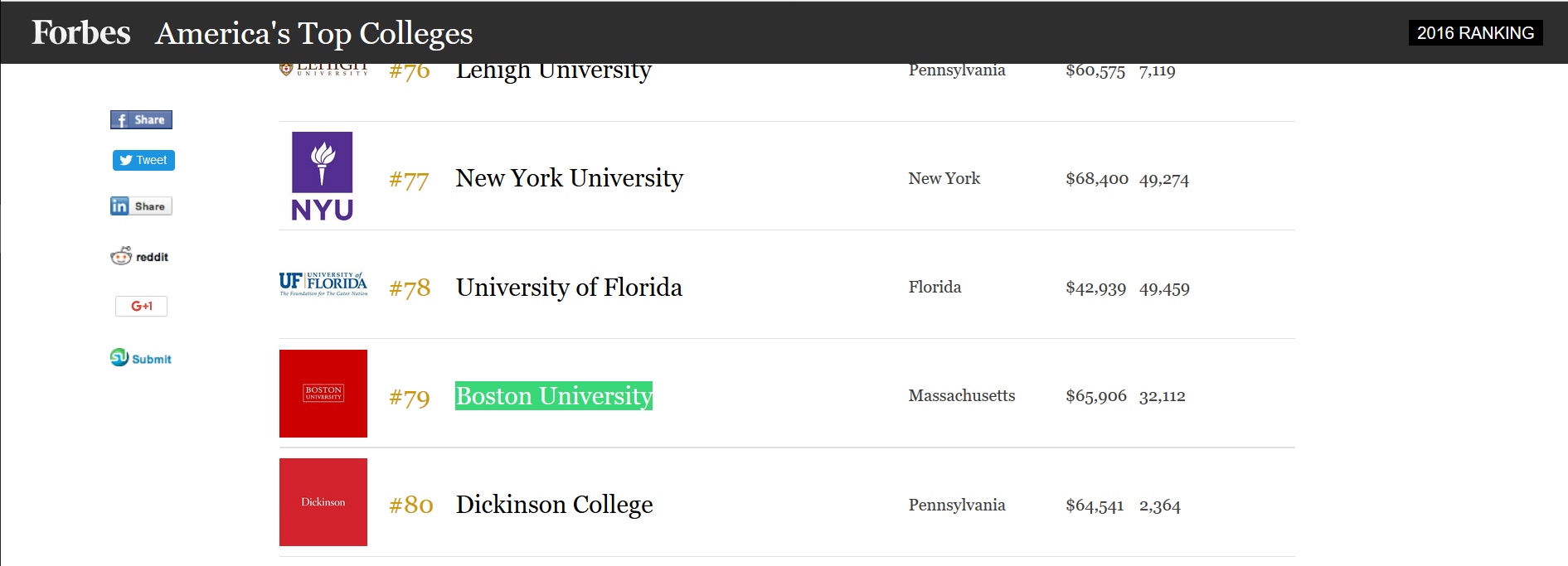
Boston University is a textbook example of how dramatically competition has increased in the last few years. Boston University admitted 30-40% of freshman applicants between 2010 and 2013. In the first half of the 2010’s, middle class students in the top 25% of their class, with nice but not spectacular resumes, good essays, and ACT scores around 30 or SAT scores around 1250 would be good candidates for acceptance. Most of those students would be offered college acceptance by Boston U., a small handful would be denied.

Fast forward to 2017. This fall, Boston University received a record-breaking 60,000 plus applicants for 3,400 freshman spots, and accepted only 25% of applicants. Every single admitted freshman at BU this year was in the top 7% of their high school class!!! The median SAT score was 1450!! And this is at a college that is high quality, but by no means an elite university.

The same jump in competitiveness is happening at UT-Austin, Texas A&M, USC, Vanderbilt, Georgia and nearly every college and university that students at Memorial, Kinkaid, St. John’s, Episcopal, Awty, Lamar, and Stratford will apply to. This year, UCLA received over 100,000 freshman applications, the first university to ever break the 100K mark. UT-Austin experienced the same massive increase in freshman applications, with the number of fall 2016 applications expected in the 60,000 plus range, a jump of 20,000 from just two years ago.
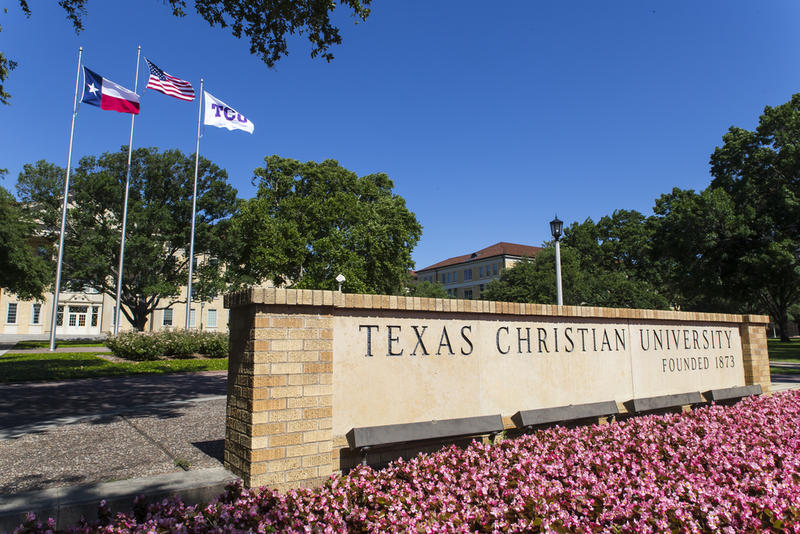
Last fall, I visited college admissions information sessions put on by TCU, SMU, and Trinity TX. All three made the same strong announcement to the families and students in the audience: “It is much tougher to get accepted to our school than a few years ago. Don’t go by the historical profile that we’ve typically accepted.”

Good grades and SAT/ACT scores are only a starting point in gaining acceptance to the top 150 colleges and universities. Successful applications require a compelling theme, interesting and unique essays, and standout activities to break from the pack and catch the attention of admission staffs.

If you want to learn more about what it takes to get accepted at top college choices, please read this post.

College Admissions Mistake #4: Failing to Make College Visits

 
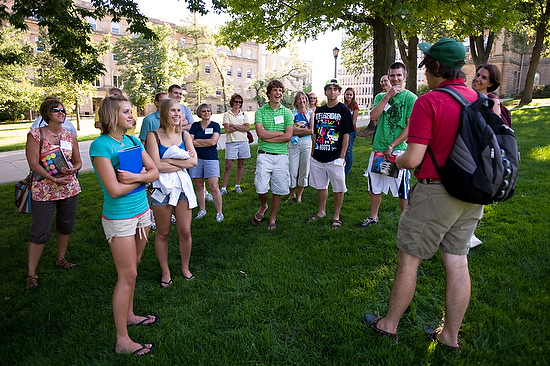
College visits are important for demonstrating real interest in the college and they also yield a trove of critical information. A campus visit that is spent wisely will help your family decide if the school fits your child’s needs socially, academically, and culturally.

In today’s hyper-competitive admissions landscape, colleges pay close attention to student visits. For admission staff, visits are an indication of the student’s interest and seriousness about the school and the admission process. Even public universities are now taking inventory of sign-ins at the admissions office. A visit, tour, and overnight campus stay could be the difference between acceptance and denial.

Further, campus visits during in-session periods of class are the best way to get a thorough understanding of the campus culture, academic climate, and campus social life. Visit classes and departments, the school bookstore, and try to connect with faculty and staff. Arrange for an overnight stay in the dorms, meet and interview current students. That’s how you find out what is really going on at the college, beyond the marketing materials, fancy websites, and shiny fitness centers.

College Admissions Mistake #3: Assuming Private Universities are Too Expensive

 
When choosing colleges to research and apply to, many students and families make the critical college admissions mistake of eliminating private universities because of their sticker price.  Yes, private universities often have a higher sticker price than their public university counterparts. However, the actual cost to families is frequently the same or less than what you would pay at your local flagship public university.

The average discount at private universities was 48.6% in 2015. With an average yearly total cost sticker price of just less than $35,000, an education at the 725 private colleges ranked by US News frequently ends up as less expensive than public universities, especially when compared to out-of-state public universities.

Here’s the math: $35,000 minus 48.6% discount ($16,800) equals $18,200 in total cost on average for private universities. UT-Austin estimates their yearly total cost for Texas residents at $23-25,000, as does Texas A&M. Neither of these schools will give middle class students a dime of aid, unless the student is an elite academic scholar. Many private universities will cost your family less than the flagship public universities in Texas, or your home state, and will provide many more valuable services.

Popular out-of-state universities like the University of Colorado-Boulder, UCLA, and the University of Georgia are almost always more expensive than private universities. These schools give out minimal aid to middle class families and most families will pay 100% of the total cost.  CU-Boulder estimates the out-of-state total cost at $50,469. UCLA costs over $60,000 per year for out-of-state students and Georgia estimates their non-resident total cost at $45,128.  When compared to the average cost for a private university, these massive public universities are much more expensive.

Further, we must raise the question of value. If most of the classes your child attends have 150, 300, or more students and most tests are multiple choice, then what is the real quality of his or her coursework? If a college costs less money, but does much less to help your son or daughter grow and build skills and experiences that will positively impact their career prospects, then is that college providing a worthwhile return on your investment?

College Admissions Mistake #2: Not Understanding Different Types of Colleges and the Traits That Distinguish Them

To properly evaluate and choose the right colleges for you, we must understand the traits of the different pools of colleges in the U.S. College education is not a widget that is exactly the same at every college or university, even when comparing the same major at two or more schools. Different types of colleges have different missions, different size/scale, varying availability of professor interaction, and varied pedagogical methods.

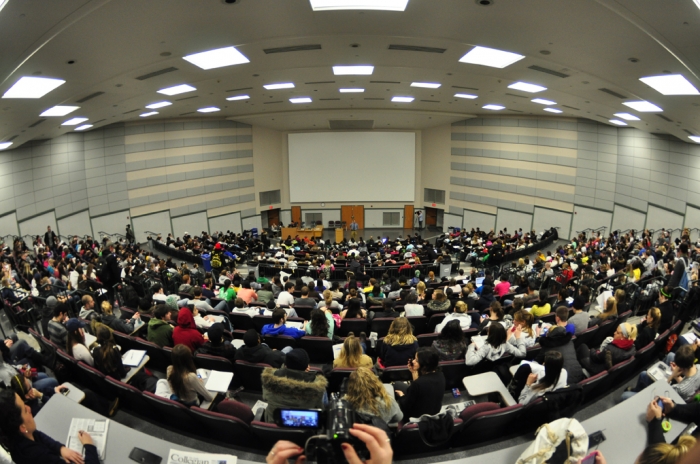
Public research universities with 25,000-65,000 undergraduate students (UT-Austin, A&M, UCLA, U of Alabama, etc.) offer large (200 or more students), mostly lecture oriented classes, with discussion-based courses available only to upper division students, if at all.

Smaller private colleges with approximately 2,000 students, sometimes called liberal arts colleges or teaching universities (Trinity TX, Amherst, Williams, Pomona), typically offer nearly all courses in discussion-based settings, with a small number of lecture courses. Nearly all classes are 25 or less, with many classes of 10-15 students.

Medium sized universities, typically private with 5-10,000 undergrads (Ivies, Stanford, SMU, TCU, Tulane, Vanderbilt), with some larger 10-20k undergraduates (USC, NYU, BU, Baylor), vary in the kinds of teaching styles and settings on offer. Some do a great job in limiting large lecture classes and mandating professor support for undergrads, many do not.

Penn and other Ivies have lots of lecture classes that have 100 or more students and professors who are not so available as hoped for. First and second year courses at UCLA, UT-Austin, Texas A&M, LSU, and many flagship public universities usually have 200 students or more. Faculty to student ratios at these and other universities are misleading!

We have had dozens students come to us in the last decade after a semester or two of personal and academic struggle at UCLA, UT-Austin, Texas A&M, LSU, and many other flagship public universities. In nearly every case, the students remarked that the biggest obstacle to their success was the overwhelming size and scale of the university.
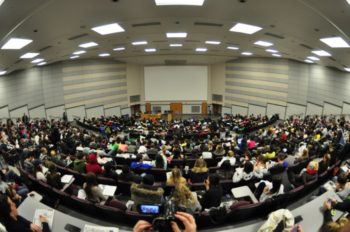
These students were surprised that all of their classes were large lectures of 300-plus students with professors who were not helpful. Their families, high school staff, and teachers had not advised them (obviously they had not worked with us on college admission) that these universities were massive in scale and could prove difficult to navigate.

Many other uninformed students and families are surprised that Penn and other Ivies have lots of lecture classes that have 100 or more students and professors who are not so available as hoped for. BU, USC, and NYU and many other medium-sized private universities are notorious for offering 1st and 2nd year classes that have several hundred or more students like those found at public research universities.