
Posts By: Hayden Shumsky

Poor High School Study Habits Linger Through College Says Largest College Student Survey

 
The National Survey of Student Engagement (NSSE), sponsored by Indiana University at Bloomington,  is one of the most important aggregators of information about student academic performance in college.  Every year, this survey is given to approximately 300,000 college students at institutions of all levels including flagship public research universities, elite private research universities, and private teaching and liberal arts colleges. This year’s findings mimic previous years in many ways, but a key finding on study habits makes this research important.

High School Students With Good Study Habits Acquired A Grades in 63% of First Year College Courses

This year’s survey focused on the enduring academic effects of student habits from high school through the first years of college. We have always preached that the habits (especially study habits and time-management) that your child practices in high school are very likely to endure through the initial years of college.  The NSSE finds that our observation is true.  Students who studied the most effectively (using higher order learning strategies and with less distractions) and for the most number of hours in high school were the highest performers in the early years of college. As college freshmen, those who were efficient and committed students in high school acquired A’s in 63% of classes, a rate more than one-third higher than those who studied less in high school.

Distracted and Undisciplined High School Students Failed to Even Find a Quiet Place to Study in College

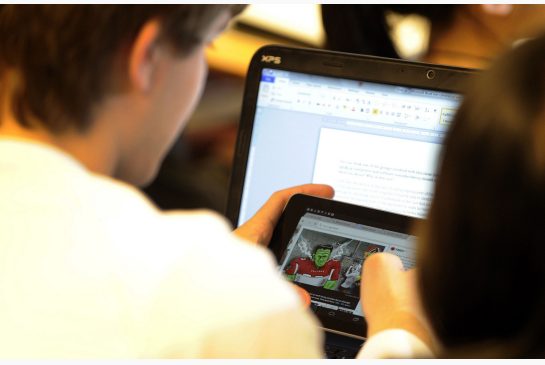
Parents of the latest generation of high school graduates have repeatedly complained to us that their children are not taking the basic steps to be effective students.  Parents observe their children using the worst of study strategies distracted studentlike: studying while watching TV, while browsing the internet, or using social media.  Moms and Dads are right to be concerned, as these behaviors carry over from high school to the early years of college.  Those who studied effectively in high school continued to do so in college.  Those who were dedicated students in high school were also nearly twice as likely to study in a quiet place in their first year of college than their less-committed classmates.
The number one finding in this year’s survey is that student engagement in academic and extra-curricular activities is predictive of academic performance. Those who are most challenged and engaged end up with the highest grades. Yet, only 54% of college freshmen and just 61% of college seniors were highly challenged by their coursework. Secondly, students across all majors except engineering are spending about 12-15 hours per week studying and preparing outside of class time. Engineers are studying more than any other subject area, which is similar to findings across a number of major research efforts on college student behaviors. student-library

We Can Teach Your Child to Become a Good Student

If your high school-aged son or daughter has poor or underdeveloped study habits and is not engaged by coursework and extra-curricular activities, then a crash in college is likely.  We have the only programs in America dedicated to teaching high school students to study effectively,complete all obligations and assignments, and have plenty of time for relaxation, social life, fun, and engaging pursuits.

First, we will teach your child to read for meaning, take succinct and useful notes, and how to prepare for tests and write essays.  Next, we will teach your high schooler to: plan and review their weekly tasks and assignments, identify and track the habits, routines, and feelings that lead to consistent productivity, and turn long term goals into actionable steps today. Don’t let your child’s bad habits linger any longer. Get started with our turnaround programs today!


Key Takeaways:

  • Bad habits in high school linger through the early years of college
  • Students perform better in college in and out of class when they are engaged and challenged
  • The internet and television are major distractions and a huge obstacle to student academic success in college
  • Bored students perform poorly in high school and college
The Shumsky Quick Guide to Playing Sports in College

Want to Play Sports In College? What do You Need to Know?

First, register with the NCAA in 10th grade
You may or may not play Division I sports in college, but even if you do not, please do not take any risk of violating NCAA rules. Registration with the NCAA takes but a few minutes of time.

What are the NCAA Divisions? What are the differences between Division I, Division II, and Division III programs?

Divisions I and II may offer you athletic scholarships for the all-in cost of attending the college. Division III schools do not offer athletic scholarships, however, they frequently offer merit aid to athletes that are attractive to the coach and school.

Division I
Division I is the highest division in the NCAA and is composed of the teams and schools that you frequently see on television. Many of the universities that compete in Division I are flagship public research universities like The University of Texas-Austin, Ohio State, UCLA, etc. or private research universities like Rice, USC, Vanderbilt, the Ivy League schools, etc. The competition is fierce and near-professionalized in many of the sports and the athletes that compete for Division I programs are usually amongst the nation’s best performers in high school. Typically, Division I athletics require massive amounts of time and energy from the students who play for a university’s teams.

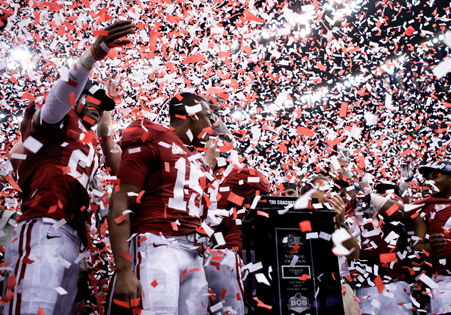
NEW ORLEANS, LA - JANUARY 09: Dre Kirkpatrick #21 and Darius Hanks #15 of the Alabama Crimson Tide celebrate after defeating Louisiana State University Tigers in the 2012 Allstate BCS National Championship Game at Mercedes-Benz Superdome on January 9, 2012 in New Orleans, Louisiana. Alabama won the game by a score of 21-0. (Photo by Andy Lyons/Getty Images)

(Photo by Andy Lyons/Getty Images)

In football, baseball/softball, basketball, hockey, swimming, track, soccer, and lacrosse, the in-season commitment is typically 50 hours per week or more including practices, travel, and games or events. Official Rules limit the amount of sanctioned practice to 20 hours per week, but our clients and other athletes have reported a much different experience in actuality. Out of season work is typically 20-30 or more hours per week. In secondary sports, the in-season commitment is usually around 40 hours per week and 15-20 hours per week off-season.

In summary, Division I athletics are like a full-time job and require a huge commitment from the student-athletes. To manage academic and athletic demands, one needs to be well-organized and highly disciplined in their habits. Furthermore, the time demands of a Division I sport will preclude many student-athletes from completing majors in high workload areas like engineering, mathematics, computer science, and other STEM fields.

Division II
Division II athletics programs form a middle level between the hyper-demanding and competitive Division I programs and the more participative oriented Division III athletic offerings. Division II schools offer full athletic scholarships, but usually have a smaller number of scholarship athletes on each team. For example, in football, Division I schools offer about 85 scholarships per season, but in Division II that number is 36. Division II schools are often not as strong as Division I or Division III schools academically.division II athletes

There are a handful of outstanding academic universities in Division II, mostly small to medium sized private colleges, but many of the schools are of secondary or tertiary quality. Rollins College, Bentley University, and UC-San Diego are excellent schools that play Division II sports. In Texas, St. Edward’s University is a solid academic institution, but the remainder of the Division II schools in the state are not so strong. Schools like West Texas A&M, Tarleton State, and Midwestern State are not particularly high-powered academically.

Division II athletics are pretty strong in terms of the level of competition and many of the athletes in Division II will be spending much of their time out of class working on their sport. However, the demands of Division II in terms of practice time are at least 10-25% lower than their counterparts in Division I.

Division III
Division III athletics offer a nice balance for college student-athletes. Division III athletics programs span the gamut from hyper-competitive to more participative, but still allow student-athletes to have time to focus on their academic demands. Typical time spent on sports in-season for Division III athletes is 20-30 hours per week and out of season 5-10 hours per week. This leaves plenty of time for students to maximize their learning and get a first rate education in their area of study.

Division III schools are mostly teaching universities/liberal arts colleges; some of the strongest academic institutions in the U.S. are members of Division III. Elite colleges like Amherst, Williams, Pomona, Haveford, and Oberlin all play in Division III. Some schools like Johns Hopkins and Colorado College participate in Division III for most sports, but have a Division I program in one or two sports.

division III athletesDivision III schools do not offer athletic scholarships, but will frequently offer substantial merit aid packages to student-athletes that the school and its coaches find attractive. Nearly all Houston-area student-athletes can play sports at the Division III level. Texas’ TAPPPS, 5-A, and 6-A athletic conferences play at a very high level and athletes from Houston’s top public and private schools will be sought after by many Division III programs.

In summary, Division III offers a way to play sports in college without crazy levels of commitment. Furthermore, a good athlete from Houston might get accepted to a Division III school, and likely a strong academic program, that they would not have access to without their athletic abilities.

How to Research Colleges- Part 1

In recent post, we revealed Dr. Shumsky’s secret formula for college and career planning. The recipe gives you the exact steps in planning for college admission. Yet, there are other crucial pieces of information to pay very close attention to.  We are asked all the time about the validity of U.S. News Rankings, acceptance rates, and other data available in guidebooks and online.  As a family, you should take most of that information with a grain of salt as the data is usually self-reported or just the opinion of the author. The 4-year and 6-year graduation rates of the prospective university, however, are absolutely worthy of your attention.

In completing your college research, your priority is to find colleges that fit you and will serve your needs with good academic programs and engaging social and extra-curricular outlets. Successfully matriculating in a timely fashion is a must, for both financial and personal reasons.  If the prospective university does not have a respectable rate of graduation, then that university is very likely not a university that is worthy of attending. In your research, you want to try and find prospective colleges that graduate at least 70% in 4 years.  These colleges are moving the vast majority of their students through without any major hiccups.  job applicants in line

You should eliminate from your college list any school that does not graduate at least 70% of students in 6 years. These universities have at least two of the following traits: low-quality faculty, students who are not serious about their future and career, and a failure to commit appropriate resources to student support.

The goal is graduation within a maximum of 5 years and a path to fruitful employment or graduate school placement.  Employers and graduate school admission personnel know the quality of your university’s programs, you must know also.

How to Be A Success In College and Beyond


A MAP FOR COLLEGE SUCCESS AND ENTRY TO FRUITFUL EMPLOYMENT OR GRADUATE SCHOOL

FRESHMAN
1. Take 2 courses that relate to potential career/major
2. Two activities- one for pleasure, and one for career development
3. Maintain good GPA-3.0 minimum

SUMMER BEFORE SOPHOMORE, CHOOSE ONE OF THE FOLLOWING
1. Internship
2. Independent study
3. Career or academically oriented activity
4. Summer school

SOPHOMORE
1. Use curriculum to narrow majors to one or two
2. Academic or career oriented activity
3. Set up study abroad plan
4. Find an internship for summer
5. Connect with faculty- search for mentor, potential recommend-er

JUNIOR
1. Study abroad one or two semesters
2. Choose faculty mentor and stay in contact
3. Set up summer internship that is closely aligned to major, grad school study area, or post-college job
4. Develop senior year project or practicum
5. Develop grad school application plan or path to employment

SENIOR
1. Internship (if possible) and senior project even if school does not require
2. Work closely with mentor
3. Write resume, cover letter, and develop interview skills
4. Begin to reach out to alumni in field of interest
5. Seek out friends and family members to identify employment opportunities
6. Choose professors who will recommend you for grad school

GENERAL RECOMMENDATIONS:

  • Find a good place to study during your first week on campus, many dorm rooms are not fit for studying due to noise, distraction, etc. This will make or break your first semester grades
  • Establish a solid GPA in first 2 years, 3.2 or above
  • Learn a foreign language, studies show that those who speak foreign language earn a premium in first job and throughout their career
  • Study Abroad on a serious academic program- Increasingly this is of importance in graduate school admission and hiring in first job
  • Get to know faculty- If you introduce yourself to professors in every class during first weeks of semester, you will get benefit of doubt at grade time and have a wealth of contacts for guidance/mentoring, jobs, recommendations, and study projects
  • Participate in activities- whether for academics/career or for leisure, those students who are more involved in campus culture end up with higher grades and better college experience

Dr. Shumsky’s Secret Recipe for College and Career Planning

parent-student-frustratedChoosing colleges and drafting a path to future employment or graduate school with your son or daughter need not be a mysterious process.  In truth, there is a formula for evaluating your child, as well as prospective colleges, study paths, and career options.  Yet, the formula operates in a counter-intuitive way.  Do not waste your time with the wrong data at the wrong time.  Instead, follow our time-tested recipe and find the right colleges and study plan for your child.

Three major components are worthy of clarification.  First define the student’s needs and abilities from an academic, social, and cultural perspective.  Next, review the curriculum of each college.  Quantify both the 4-year major(s) plan(s) for options A, B, and C and the general education requirements. Finally, your task is to understand the college and its offerings.  What does the college do well? What are the weak spots or potential drawbacks if your child attends this college? Below, we present our formula for planning for the future and choosing colleges.  Follow our script in the exact order given.  If you change the order of steps, you change the outcome and may lead your child astray. Regarding two associated and important concerns: how to judge the likelihood of acceptance at any particular school and how to create a balanced list of colleges to apply to; we will cover those topics in an upcoming report.

STEP ONE

Who is your child?two-girls-and-one-boy-student-smiling-with-notebooks

• Academic strengths and weaknesses: analytical, reading comprehension, writing, computation, vocabulary, abstract reasoning, creative or artistic abilities
• Fit with major academic disciplines: STEM (science, technology, engineering, and math) majors, social sciences (psychology, economics, sociology, etc), arts and humanities (English, visual and performing arts, history,  philosophy, etc.), or pre-professional (graphic design, film and TV, nursing, agriculture, etc.)
• Learning style: aural, visual-spatial, hands-on?
• Primary learning concerns: ability to quickly synthesize large amounts of material; working memory; need for discussion; need for clarification from teachers; ability to be a self-directed learner
• Caliber of executive function skills: planning and reviewing; ability to break down projects into small steps; organization of materials, assignments, papers; turning in assignments on-time
• Learning or attention disorders: need for accommodations, learning support programs, tutors, academic coaching, extra assistance from teachers
• Resolve: ability to self-advocate, emotional stability, self-care abilities
• High school performance: achieved at abilities, underachiever, overachiever?
• Study and work habits: most majors require 10-15 hours of study each week outside of class for B grades; 20-30 hours or more for mathematics, engineering, computer science. Can student meet that standard?
• Sociability: makes friends easy, shy; entertains self or lone wolf; comfort with diverse groups, unfamiliar peers?
• Partying: student comfort with presence of alcohol, drugs; ability to handle temptations; preference for more studious peers and cultures
• Politics: fiery and activist, apolitical, conservative, liberal; student tolerance for political correctness
• Religion: need for religious services; tolerance for anti-religious attitudes; willingness to attend religious college with theology requirement

STEP TWO

What is your child’s plan for study?college textbooks

• Student curiosities: subjects, interests, majors
• Graduate school?
• First, second, and third choice major
• Research: visit school website and academic departments. Review four-year
major plan for first, second, and third choice major
• Coursework: four-year plan and course descriptions; do courses look
interesting to student? Availability of courses in student’s specific curiosity
(i.e. if daughter is prospective major in economics, are courses available in
particular interest in international trade and commerce?)
• If course descriptions are sparse on academic department website, seek out
course catalog
• Challenge of Coursework: Intellectual challenge; level of workload. Ability
of child to acquire 3.3 GPA? Refer back to step one, “who is your child?” and ability to handle distractions; high school work habits.
• General education requirements: at public research universities, can take up
50% of student’s total course-load over four years. How many courses? General
ed. courses typically boring, though not difficult. Student performance is poor
because of dull material.
• First and second year coursework: Most important, as these are years of transition and vulnerability
• Professional skill development: required internships, practicums? Senior project or thesis?
• Study abroad: specific options for student’s major, quality of study abroad
coursework. Culture and language only or serious academic work?

STEP THREE

What does this college offer my child?college campus

• Academic Quality: foremost concern! Quality of education in specific major and generally across university. Reputation, U.S. News Rankings are of no use. Must do hands-on research
• How to determine quality: review syllabi, assess typical mode of instruction and examination; typical class size for introductory courses; number of essays required per course-load
• Assigned textbooks: visit bookstore or look online. Large format synthesized texts with bolded words and summaries? Original academic works?
• Talk with current students: With lower division students: size, level of challenge, and quantity of workload in introductory classes; professor availability for assistance. Upper division students: research opportunities, internships, mentoring, study abroad, and faculty guidance with regard to careers and graduate school applications.
• Extra-curricular experiences: participative or competitive? Can any student join theater ensemble, radio station, newspaper or are they restricted to majors only? Who can join investment club, other business and career groups?
• Learning support staff for attention and learning disorders: availability of one-to-one advising, tutoring, academic coaching for study skill and time-management. Learning specialists on staff? Walk-in appointments or need for big lead times? Formal and comprehensive learning support program? Professors willingness to accommodate special needs, extra time, etc.?
• Career services: gauge quality and availability of staff. One to one help with internships, resumes, interviews, alumni connections? Investigate top employers and industries for recent grads. How frequent are graduates hired by alumni?
• Child’s comfort on campus: high, medium, low
• Observe campus social habits: lots of activity on weekends or emptying out? Socializing in groups, alone, friendly and inviting? Stress level: high, medium, low
• Housing: number on campus, in surrounding blocks, and far away from campus. How many years of on-campus living required?
• Neighboring shops & services: coffee houses, restaurants, bars, shops within
walking distance
• Greek life: percentage of students participating, volume of partying
With thorough investigation, a robust plan for the future can be created. If you have difficulty answering the above prompts and questions, then your family has more work to do. Safe passage to success in college and career is not guaranteed; please do not misjudge the current conditions.

A Path From High School to College and Beyond: Look Out for Blind Spots and Make a Career Plan

College admission success is not measured at acceptance time. Rather, it is measured at college graduation. If you and your child have chosen the right school and study path, then he or she will be on the way to fruitful employment or acceptance from a top graduate school program. If your family has chosen incorrectly, then your child will join the crowd of recent college graduates who are on the fringe. Nearly 50% of 22-27 year olds with bachelor’s degrees are working in jobs that do not require a college diploma according to the latest update (January 2016) from the Department of Labor. They are earning underwhelming salaries and not likely experiencing the satisfaction of meaningful work. Your family cannot operate without a career plan.

There are three primary factors that stand in the way of a successful match of college and study path. First, most students do not understand themselves with enough depth. They do not have a clear and honest picture of their interests, skills, habits, weaknesses, and personal traits. Grades and extra-curricular activities are a small part of the variables to be measured. Students must know their curiosities, their ability to manage their time, plan, and make decisions. A student who knows how she handles distractions and temptations, how long it takes her to read a chapter in a college textbook or complete a five-page essay assignment, how her college major connects to her career plan, and what iStock_000016548553Medium[1]it takes to keep herself feeling good and productive can say that she has a good understanding of herself.

Second, students do not have appropriate understanding of major options, study paths, and career plans. Most children today are familiar with just a small sliver of the hundreds of careers that might suit their interests and skills. Rare is the college applicant who has looked intently at the four-year major plans and general education requirements at their prospective colleges. Students need not commit to a career in their first year of college, but they must have an understanding of career options and major plans A, B, and C.

Most students do not know the difference between the major disciplines on offer at colleges and universities. There is tremendous variety in both the educational style and curriculum in the social sciences, STEM fields, arts and humanities, and pre-professional tracks. How might your child fit in each of these major blocks of study, given each curriculum and associated set of needed skills?

Can your child say with certainty that he or she has clarity about exactly what is required to achieve a cumulative GPA of 3.3 or better in college? That is the minimum performance level expected if he or she wants to get into top graduate school programs. Does your son or daughter know what is expected by hiring managers in his or her prospective career, when applying for a first real job?Traits-to-Look-For-In-Your-New-Hire

Finally, most students are uninformed about the character of the offerings at the colleges they are applying to or how each of the 4 major pools of colleges (public research, private research, teaching university, pre-professional or arts school) are different. The learning, social, and extra-curricular experience at a public research university like UT-Austin, UCLA, or Texas Tech is exceedingly different in character than the experience on offer at a teaching university like Trinity (TX), Oberlin, or Claremont McKenna. SMU, Rice, and NYU and other private research universities have very little in common with professional and arts schools like Embry-Riddle Aeronautical and Savannah College of Arts and Design.

How will your child respond to classrooms with 500 fellow students in introductory and general education courses at a school like Texas A&M? Will your child prefer the intimacy of knowing the vast majority of his or her fellow classmates and professors, as would happen at Southwestern University in Georgetown, TX? Will your child fall through the cracks of a large private research university of 15,000 or more students like Syracuse or USC? Can your child deal with the fast pace of an urban campus like Boston University or George Washington?

Some parents will throw up their hands at the prospect of completing this kind of research and having direct and honest conversations with their child about the student’s habits, talents, and personality. Parents are too busy with the work of managing their daily lives and those of their children.

Most adolescents will shrug off your questions and concerns as parent nagging or unnecessary work and worry. If this is true in your household, then you require expert and compassionate outside assistance.

Nevertheless, it is important for every parent to know what is to be done to properly evaluate your child and his or her plan for study and a future career. Thus we have enclosed our recipe for doing such work in this month’s newsletter. If you want to ensure that your child will have rewarding and meaningful work or a solid shot at top graduate school programs upon college graduation, then you will complete the arduous task ahead. If you should run into roadblocks or have questions about where to go from here, then feel free to reach out to our office. We do this kind of work everyday.CollegeGrads

How to Get a Great Job After College Or How to Be Competitive for Top Graduate Schools

To be competitive in the 21st century job and graduate school markets, 8 essential skill sets are needed. Fruitful job opportunities upon graduation come forth Traits-to-Look-For-In-Your-New-Hirewhen an applicant can bring obvious value to the employer on day one. Employers and graduate admissions committees are overwhelmed by applicants, many of whom may have graduated from top 150 colleges but lack the necessary skills to be productive and efficient. In a marketplace where networking and insider connections have less weight than in years past, a college bound student must be aware of the areas to master in the undergraduate years.

Research– the ability to gather, observe, analyze, synthesize, and apply information to solve concrete problems.

Communication– to share ideas succinctly and clearly in oral and written form. Active listening is likely the most important component of communication skill. Voicing an opinion not connected to the immediately preceding discourse is the most common mistake new college graduates make.

Autonomy– how to turn ideas and plans into action and how to initiate this process without prodding.

Social Intelligence– understanding social cues in groups and one-to-one situations. Quickly comprehending cultural meaning and customs in unfamiliar situations.

Adaptability– adjusting rapidly to novelty, uncertainty and continuous change.

Cooperation– solving problems in small groups. Offering constructive criticism without alienating others. Receiving criticism non-defensively. Solving a task collectively via impartial compromise.

Identity– positively standing out for attitude and actions. Maintaining personal boundaries without offending others. Speaking forthrightly about values, ethics and preferences with the goal of inclusion rather than exclusion.

Productivity– completing a project in the manner and time you committed to. Focusing on the task at hand and working quickly without sacrifice of accuracy. Meeting deadlines, fulfilling expectations, and giving your best effort.