
Posts By: Hayden Shumsky

Successful Students Series, Post #2: Taking Notes on Reading Assignments, Prior to Discussion in Class

In our prior post on the habits and skills of successful students, we discussed reading for meaning. The ability to breakdown texts and separate important ideas and inessential details is crucial in academic work. Thus, it is priority one amongst the skills and habits of top students. However, efficient reading for meaning on its own is but one-half of the equation for retained understanding. The second half of the process is taking notes on the reading that are succinct, well-organized, and completed before the reading is discussed in class.

Taking notes on reading assignments prior to class discussion is the fastest route to better grades

If I can give one instruction to American middle, high school, and college students in terms of immediately improving their grades and understanding, I strongly urge them to read and take notes on class materials before they are discussed in class. A primary review, which includes reading for meaning and note-taking, will allow the student to be familiar with the important ideas in a chapter when they are discussed by teachers and classmates. This crucial step in preparation will massively increase the student’s retention of information and allows the student to function primarily as a listener and thinker in the classroom.teen-listening-in-class

Why is it so important to be a thinker and listener during class discussion? Just like in skill #1, reading for meaning, we use class for thinking and listening because of the limits of the mind. The human brain is not built for multi-tasking at high levels of attention for more than a few seconds at a time. Current cognitive research shows that multi-tasking significantly deteriorates attention and memory encoding for both primary and secondary tasks. See references on attention and multitasking here: http://www.facultyfocus.com/articles/teaching-professor-blog/multitasking-confronting-students-with-the-facts/  and here: http://hilt.harvard.edu/files/hilt/files/notetaking_0.pdf for more information.

Class time is for thinking and listening, not note-taking!!!

In a classroom, those who can listen and think about the information being discussed are at a massive advantage over those who will act as stenographers as they write down every detail of the teacher’s words. Students who are writing lots of notes in class are unable to efficiently process the information that they are listening to. The mind is incapable of listening, writing, and thinking at the same time for more than a few seconds. When a student acts as a multi-tasker in class, he or she is wasting precious stores of attention. The students might as well be trying to take notes while out at the mall, riding a skateboard, or playing a videogame. That’s how impaired their attention is when trying to multi-task in class by listening, writing, and thinking at the same time.student-multitasking
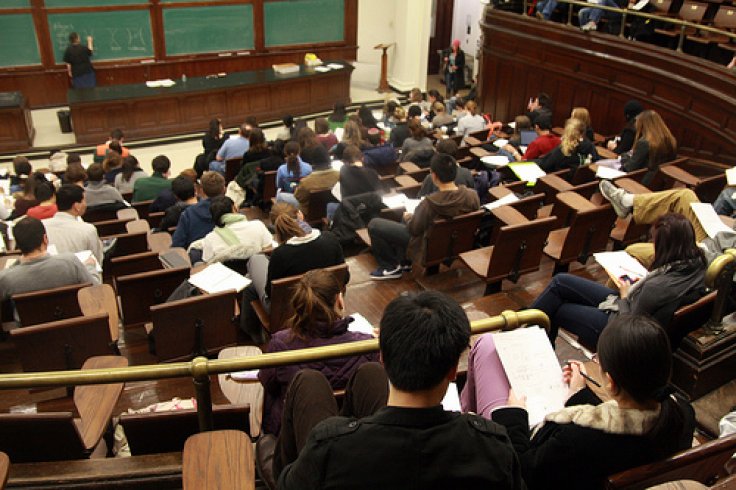
Further, when a student enters a class discussion of new material without a baseline familiarity with the ideas and terms discussed, he or she has a much lower likelihood of retention. To say things simply, if a student comes unprepared for a class discussion of moderately complex ideas (like in English or history classes) or one with lots of technical jargon and vocabulary (like science or social science coursework), the student’s mind is working as if he or she were listening to an unfamiliar foreign language.

The student who has read the text for meaning, taken notes that are succinct and capture the thesis, supporting ideas, and key terms and definitions, has begun the process of cognition and encoding into long-term working memory. If he or she comes to class with notes in hand, listens intently to class discussion, and edits and adds to notes as appropriate, then the student will have done nearly all of the work in learning and retaining the important information. The information will now be well-digested and encoded in the memory for easy recall on test day.

Rather than spend hours reviewing the text and review packets, this student will simply review his or her notes for a modest amount of time. A student who has read and taken good notes and brought them to class for clarification and editing will not need to spend hours and hours preparing for tests. Such a student is acting in tune with the limits of the mind and the efficient working of the learning process.

There is even more good news than meets the eye here. There will be times when even the most gifted students are unable to fully grasp all of the important ideas, terms, and definitions in a new chapter. In such cases, note-taking and preparation before class discussion is even more crucial. When a student reads and takes note first, he or she enters the classroom with an inventory of that which is well-understood and that which is unclear. The student can make a note to him or herself to listen especially intently for clarification on the points that are unclear.

If for example, in a chapter on plant life in biology, a student reads and takes notes prior to class and understands ideas about photosynthesis and metabolism, but does not understand hybridization, the student will make a note and listen very closely to the teacher when hybridization is discussed. The existing notes can then be edited to reflect the instruction and clarification. If the student still does not understand hybridization at this point, he or she can turn to the instructor for further clarification. If afterward he or she is still unclear, then the student knows that tutoring or help from a fellow student is required and he or she can then obtain the specific help needed.student-asking-for-clarification

Most students don’t know which ideas they don’t understand until it is too late

Contrast this situation with the typical student pattern. Usually, the student has not read and taken notes before the subjects are discussed in class. The student will try to listen, learn, and take notes on the discussion, much of which is disorganized, incoherent, and not useful in the process of learning and recall. The student will likely not read the text until the days leading up to the test and may not ever do so.

The student will not have a good inventory of what he or she knows and does not know until the last minute, if at all. This typical student will likely spend the night prior to test day engaged in counter-productive re-reading of the text and incoherent notes or will inefficiently try to cram the information into the mind through rote memorization. These methods lead to high anxiety, confusion, and poor recall.

How can such a student expect to correctly answer 85% or more of the test questions in such a case? The typical student has used methods that are completely at odds with learning and mastery.

Achieving solid grades is easy if you have the right methods and have the habits that lead to preparation and retained learning. Nearly any student in America can be a consistent B+ student in middle school, high school, and college if he or she knows what to do. Most could easily be A students with some refinement of study methods and atime-management.
If you or your child wants to learn the methods of efficient reading, note-taking, test preparation, and essay writing, then you need our Learning to Learn study methods course. Add in our time-management and mental performance skills course (for teens or for college students) and you or your student can rise to the top of the class.

Successful Students Series, Post #1: The Skill Of Reading For Meaning

This week, we are covering the top skills and habits of successful students. Today, we tackle reading for meaning. There is no academic skill as powerful as efficient reading for meaning. If a student can quickly pull out the main ideas from texts, understand the hidden structure and organization of academic and fiction works, and connect secondary terms and concepts with the thesis, then he or she will be on the fast track to producing outstanding grades.

Mind-space is reserved only for important ideas

Efficient and skilled readers focus only on important information and do not waste precious mind-space on inessential data. The mind, for all of its miraculous abilities, is quite limited in its ability to recall information from working short-term memory. The only solution to this biological constraint is to avoid overwhelming the mind with unimportant information. Thus, a skilled reader truly digests the main ideas, understands how they are supported with other secondary concepts and terms, and discards the bulk of unnecessary detail that fills up most chapters and texts.

To give a metaphor that may help you understand the problem, you might think of Olympic distance runners. In races such as the 1,500, 5,000, or 10,000 meter run, the most successful runners are the most efficient runners. It is biologically impossible for humans to run at peak effort over 5,000 or 10,000 meters; the body cannot produce enough energy to maintain a sprint over such distance. Instead, medal winners keep a steady, efficient pace through the bulk of the distance and use their max effort only for the final lap. Gold medal winners have strength to close out the race because they have identified the most important portion of the contest and focused their energies on that piece.

Just as it is impossible for the body to maintain max effort over long distances when running, it is also impossible for the mind to hold onto all of the details and information contained in a chapter of a textbook. The mind simply cannot process and retain all of the information in a single chapter from a high school or college textbook or novel, much less all of the details from 5 or more classes at once. There is far too much information! Instead, a successful student knows how to identify the structure and clues from the text that point to the most important information, like the thesis, key terms, and supporting evidence. An inefficient student will treat all information as equal in value, with no thought as to priority. Such a method leads to results below the student’s true capabilities.

A student who reads for meaning and efficiency focuses his or her effort on identifying, breaking down, and processing the most important information. The thesis, connected secondary ideas and key terms are like the final lap of an Olympic distance race. They are the elements that champions focus upon.

Unfortunately, most students have no idea how to do such efficient reading. These skills are not taught in schools, even though they are the backbone of academic performance and understanding. Instead, most students rely on memorization, an unproductive learning technique that is severely limited by the biological constraints on our short-term working memory.

If you or your child wants to learn to be an efficient student and how to read for meaning, take useful notes, prepare for exams, and write academic essays, then please take a look at our Learning to Learn study skills and methods program for middle, high school, and college students.

The 11 Habits and Skills of Successful Students


Successful Students:

(Click text for more information about each skill or habit)

  1. Efficiently pull out the thesis and secondary important ideas from academic texts and lectures/discussions across every area of the core curriculum.

  2. Take notes on reading assignments that are organized, succinct, and completed prior to the topic being discussed in class.

  3. Bring their notes to class so that they can be edited and added to with new ideas covered by the teacher.

  4. Ask for assistance from teachers, parents, tutors when the student does not fully understand a topic or assignment, well in advance of due dates.

  5. Plan each week so that they can efficiently complete all schoolwork and have plenty of time for play, social activities, and relaxation.

  6. Clarify the results they would like to achieve at school and in life and hold themselves to those goals.

  7. Break down large goals and projects into small and specific tasks to be completed.

  8. Know and maintain the routines, habits, and feelings that keep the student healthy, happy, and productive.

  9. Accurately gauge the amount of time needed to complete school and personal tasks.

  10. Review the preceding week’s tasks in order to keep track of uncompleted tasks and lessons to be learned from positive and negative results.

  11. Make consistent, regular efforts over time rather than working in an all or nothing fashion.

Secrets of College Admissions Success: 9th and 10th Grade Matter in College Admissions, Way More than Most Families and School Administrators Realize

Most high schools and parents operate under the assumption that 9th and 10th grade are an appropriate time for their child to adapt to the experiences, academic demands, and social reality of life as a teenager in high school. Conventional wisdom portrays 9th and 10th grade as an intermission period where teenagers sow their oats, make some mistakes, and learn what it takes to be successful in high school. College admissions staffs, such conventional wisdom portends, focus much more heavily on the second half of high school, 11th and 12th grades. While there is a grain of truth in that perception, further examination makes obvious the folly of such an idea.parent-student-frustrated

One-half of your child’s high school record will be completed by the end of 10th grade. If you believe that college admissions staffs simply throw out or even downplay 50% of an applicant’s academic and extracurricular portfolio, then you are a tad removed from reality. Let me take you one step further along in the admission process to fully illuminate this misguided thinking.

Your child will likely be sending off college applications in the fall of 12th grade. Your child’s application will therefore be reviewed in the fall and winter of his or her 12th grade year. Thus, when your child’s application is reviewed, college admissions staffs will only possess information pertaining to your child’s performance through the first semester of 12th grade. In most cases, however, admission staffs don’t see any 12th grade records.

Far more often than not, high schools do not send off 12th grade, first semester grades in time for receipt and review by college admissions staffs prior to offering acceptances. In fact, during my tenure as an admissions committee member at Northwestern University and the University of Virginia, nearly every admission decision was made without 12th grade academic reports in hand. If you were to believe conventional wisdom that 9th and 10th grade don’t count much, then you would be saying that college admissions decisions are mostly made on the basis of one year of high school performance, 11th grade. What tomfoolery!?

So, knowing now that 9th and 10th grade do in fact count heavily in college admissions decisions, let me reveal the most powerful secret in college admissions. The secret is that 9th and 10th grade performance do not make up one-half of your child’s college admissions portfolio, they actually make up two-thirds!

ap testsAgain, remember that nearly all admissions decisions are made on the basis of performance through the end of 11th grade. Thus, 9th and 10th grade make up two of the three years of performance that college admissions personnel will see when they make a decision on your child’s application. Do you understand now?

Now that the secret is out, your family has a leg up on 99% of the students and families in America. Most will continue to imagine that 9th and 10th grade performance is a small factor in college admissions. You know the secret, now what are you going to do with it?

There is but one answer to that question. You must pull your child aside immediately and make a plan for academic and extra-curricular success that begins immediately. You must not waste any time. You must take advantage of the insider information you have and help your child gain admission at the college of his or her dreams.

If your child starts from day one of 9th grade with a well-developed plan for success (click here to see Dr. Shumsky’s 4-year blueprint for college admission success), then there is no limit to the heights your son or daughter can attain. Admission to any college in America will be within reach. Here’s why: Every family in America believes that 11th grade counts big time in admissions decisions, so they will do their best to arrange for a stand-out 11th grade year. Nearly every middle class high school student will wake up to the fact that college is just around the corner from 11th grade and will work harder than ever to create top grades and activities. By waiting until 11th grade to get serious about the future, these families have severely restricted their child’s college options. You will not make such a mistake.two-girls-and-one-boy-student-smiling-with-notebooks

You may or may not know that success in college admissions today most often springs from special talents. Those students who are stand-outs intellectually, athletically, and/or artistically have their pick of college choices including the most competitive and prestigious universities in the country.

If your child does not possess elite talents in the arts, sports, or academic disciplines, then he or she needs to get to work immediately on exploring interests, future career paths, and ways to stand out from the crowd by broadening his or her life experiences.

Today’s college admissions staffs do not prize athletics, clubs, arts ensembles, and community service unless your child has elite talent or goes way above and beyond the norm. Instead they look for applicants who push their interests and curiosities as far as possible with depth and consistency over all years of high school.

Do not waste your child’s time with resume padding. Get to work today on helping your child discover what engages and challenges him or her. If your child stands out from the crowd from 9th grade forward, then he or she will be a highly qualified applicant to every college in America.

11th Grade is the Most Important Year for College Admissions

The First Half of High School is Over and Expectations Rise Dramatically This School Year

There is Good News: Great Opportunities Are Abound. You Can Reach the Colleges of Your Dreams, Even if Your 9th and 10th Grades Were Not Stellar. But You Must Have a Plan to Distinguish Yourself in 11th Grade!

Two years of high school have passed in the blink of an eye; your child will begin applying to college in approximately 12 months. Some students have already performed at an outstanding level and created a solid portfolio of grades and activities. Others have yet to maximize their grades and abilities and engage their interests with depth. For both sets of students, 11th grade is the most important year in terms of college admissions. If your child wants to reach the top 150 colleges and universities, then your family must have a plan to stand out from the masses of highly-qualified applicants.college applications photo

College admissions personnel expect that 11th graders are consistent academic performers and are working hard on their interests and curiosities. High school juniors must prove their seriousness and commitment to academic and extra-curricular activities by performing at the highest level to date. A strong 11th grade performance, in and out of class, can drastically change the way your child’s college application will be perceived. Even underachievers can rewrite their story with an upward sloping set of grades and a well-crafted set of extra-curricular activities. What does your child need to do in 11th grade in order to maximize talents and performance?

Every middle class student in America participates in school clubs, sports teams, performing arts ensembles, and community service. These activities no longer catch the eye of college admissions staff unless the student is performing at an elite level or going way beyond the norm. Instead, your child needs to start moving in the direction of his or her future path of study and career interests. Activities and experiences that connect with future majors are the most valuable entries on a resume. Does your child have clarity about interests, majors, and career plans? What will your child do this year to build a connection between activities and future plans?ACT Test image

Your child should be taking the SAT or ACT for the first time by Christmas. Plans for test preparation need to be made immediately so that realistic schedules can be created. If your child is to take the SAT Subject Tests, then 11th grade is the time to do so. Does your family have a test prep plan?

Serious college research should begin no later than the first day of 11th grade. Does your family understand the differences between the major types of American college options (Public Research, Private Research, Private Teaching) and where your child can be most happy and academically successful? What does it really take (GPA, SAT/ACT score, extra-curricular portfolio, etc.) to be accepted at your child’s top college choices?

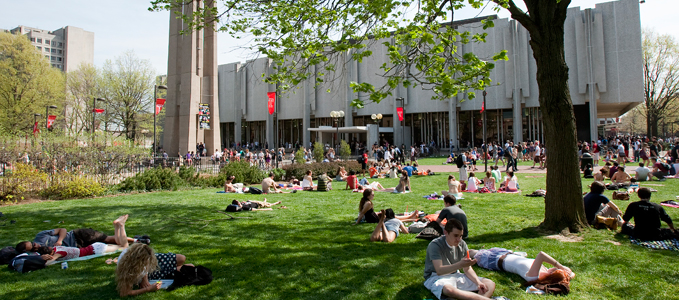
college campusWith a detailed plan of attack, your child can easily reach the colleges of his or her dreams. Those who have started strong have a leg up, but will need to finish with gusto. Sub-par performance in 9th and 10th grade can be offset with better results in the remaining years of high school. If your son or daughter acquires the guidance and support needed to complete all of the steps laid forth, then he or she will reach the desired destination. Procrastination and denial will lead to disappointment at college acceptance time. The time for reality is here; the best opportunities will go to those who distinguish themselves in 11th grade. The others will join the masses and leave their future to the whims of chance.

Inside The College Admissions Decision Room: Who Gets Accepted And What Factors Are Most Important


Most parents and students have very little understanding of what actually happens in a college admission committee and the ways that each application is evaluated. Admission personnel track and rate applicants on the following set of typical measures. Below is a standard matrix of importance, but in no way should you assume that our matrix is the exact matrix upon which your child will be measured at any single prospective school. As mentioned before, the priorities change from year to year as student demographics and college administration priorities change.

1. Special Talents or Skills

This is the first and most important matter to every college in America. Beyond actual grades, colleges want to attract the most talented academic minds they can get their hands on. Every college in America wants the student who has already collaborated with NASA on research related to space travel, even if he or she is a C student or worse!

Performing arts superstars are equally sought after, like the young woman who has been dubbed the next Maria Callas and is performing with the NY Metropolitan Opera while attending high school. Colleges want the top talents in academics, performing arts, and athletics and those will be the first priority for any admission staff.

teenage opera singerWhile celebrity is not a skill or talent, fame is just as much a priority for college admission personnel, so admitting the children of famous or powerful parents is an equally high priority.

2. Geographic Origin, Race, Ethnicity, and Socio-Economic Background

These are not quite as important as special talents or skills, but are of very high importance to admission staff. Colleges want to build their name and reputation in as many areas as possible within America and across the world. Attracting students from every domestic region and foreign country is of interest to every college development and PR staff and thus is important to admission personnel.

Further, universities want to appease their alumni, donors, and regulators, so building a racially, ethnically, and socio-economically diverse campus is a priority. Public universities are under huge pressures from state and federal governments to serve under-represented and underprivileged students. Private universities face donor pressures to not be seen as homogeneous or strictly as places for privileged students.

One key piece of information to keep in mind here: students from the same high school often apply to the same small group of schools as their classmates. Most often, this works against their chances of admission, as colleges are loathe to take more than 1 or 2 students from the same high school (except for local public universities). The same is true across the Houston region. Most middle class students apply to the same small group of 25 or so universities and therefore hurt their chances of admission.diverse group of college students

3. Grades in Core Academic Subjects and Quality of Coursework

Admission staff believe that half of the school day is spent in classes that do not often demand much work or brainpower, so they discount the impact of grades in electives. Grades in English, Math, Science, and History/Social Science courses and Foreign Language classes are typically pulled out and evaluated separately from the student’s overall GPA.

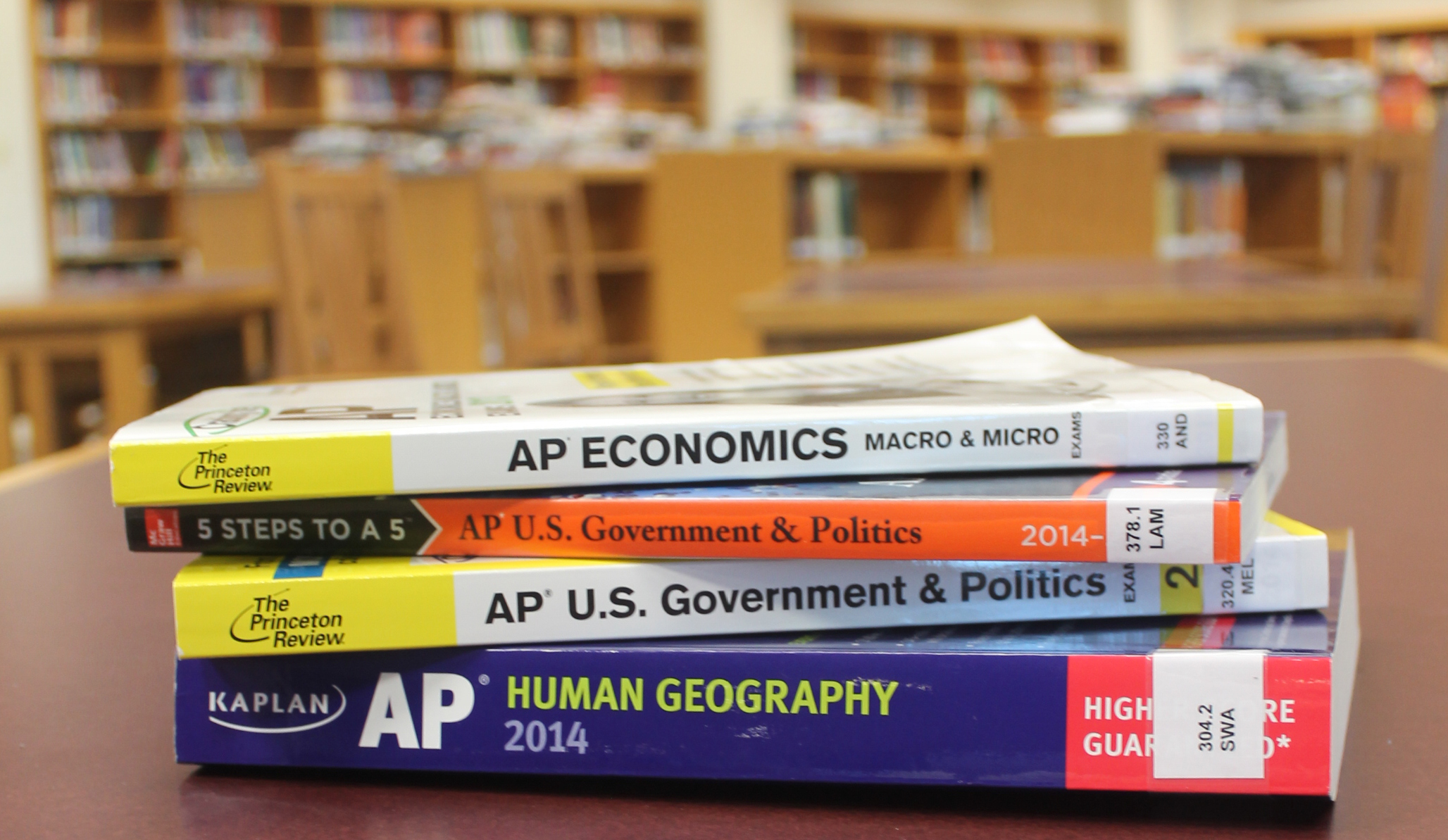
Similarly, the quality of the coursework, whether the course was AP/IB or dual credit, if offered is of great importance. Admission people prize students who challenge themselves by taking the most difficult and in-depth coursework.ap tests

The grades in courses related to the student’s identified college major are of great importance as well. In STEM majors, admission personnel will pay close attention to grades in math and science courses. Strong math and science grades can offset lower grades in other coursework. Similarly, a prospective English major can offset B grades in math and science with high marks in English and history courses.

4. SAT/ACT Scores and SAT Subject Scores

The SAT and ACT measure overall academic ability and there is a strong positive correlation between standardized test scores and college GPA. Furthermore, SAT Subject Test scores are validation of the student’s grades in the related subject area. For example, if a student has a B average in AP Physics, but acquires a 750 on the SAT Physics Test, then admissions can be certain that the quality and challenge of the curriculum at the student’s high school is high. Admissions staff have trouble evaluating the quality of similar coursework at different schools and high SAT Subject Test scores validate that a student has real mastery of the subject.

5. Application Essays

In some ways the application essay is the most important element of the application because any particular college typically attracts applicants that are very similar in grades and SAT/ACT scores. The essay is thus the only way to separate candidates and identify those who have the intangible qualities of maturity, insight, creativity, and honesty that admission staffs prioritize.

Written expression is of critical importance to college admission personnel. It is no understatement to say that an applicant’s essays will get them accepted or knock them out of the running. If your child does not write highly detailed, personal, and interesting essays, then his or her chances of admission at moderately to highly competitive colleges go way down.

6. Academic and Career Pursuits Outside of Class

high school science lab
This measure has gone way up in importance over the last several years. As college admissions gets ever more competitive, admission staffs have determined that students who pursue academic and career activities outside of class outperform their peers when they arrive on college campuses. If you want to boost your child’s college admission prospects, identify their favorite and strongest academic areas and curiosities and help your kid get involved with related out of class pursuits.

In this domain, research and identification of future majors and careers is crucial. Applicants want to start connecting their high school activities to their future path of study or work by 10th grade. It is not that admission staff believe 10th graders should have already chosen an exact future major and career. Rather, the expectation is that students should start experimenting and participating in academic and career activities as a sign of the student’s intellectual curiosity and passion. Pursuit of academic or career-related engagement out of class is the number one sign of a serious and committed student.

7. Breadth of Life Experiences

College administrators are very concerned about the current generation of new college students. Their academic and extra-curricular records have never been stronger, yet they are lacking in critical domains. Very few students in the current generation have demonstrated independence and realized their interests and passions on their own, outside of the reach of parent or school influences. If your child can demonstrate his or her independence and maturity by challenging themselves with uncomfortable self-generated experiences, then he or she will win major points with admission staff.

Examples are activities such as: playing drums for an unknown touring rock and roll band; teaching prisoners how to read, add, and subtract; traveling to South America to build sanitary systems in rural and impoverished towns; or undertaking a cultural exchange with a Kenyan school and family.

8. Class Rank, Overall GPA

high school valedictorian
Because of game-playing by high schools, parents, and students, these elements are of lower importance today than in years past, except for those colleges that have auto-admission formulas based on class rank or grade point average. Admission personnel are well-aware of how students and parents manipulate course choices to advance their class rank and overall grade point average.

Further, the quality and challenge level of elective courses has great variation across high schools so admissions staff take the perspective that such grades are close to meaningless in most cases. Additionally, many high school schools do not rank their students and have obscure formulas for calculating GPA. All of this manipulation is seen as deceitful and is therefore eliminated or lowered in importance in the admission decision making process.

9. Special Achievements and Awards

If your son or daughter wins prizes in state or national academic or arts competitions, these carry real weight with admissions staff, particularly if the award is related to the prospective major.

Awards for academic performance that are voted on by high school teachers and administrators are also particularly impressive. Students voted as a school’s top French or Physics student or Citizen of the Year by teachers and staff win points with admission staff.

The Eagle Scout award, the Girl Scouts Gold Award, and awards for FFA, athletics, and debate also catch the eye of admission personnel.

10. Community Service/Extra-curricular Activities

Where once, service to the community was somewhat exceptional, today community service is expected of every middle class student in the U.S. Unless your son or daughter is going way above and beyond the usual service hours to the community, this component will not have much impact on your child’s chances of admission.

The same is true with extra-curricular activities. Because of rampant resume padding, admission staffs cannot easily distinguish which extra-curricular activities are meaningful and which are exaggerated. Common in-school activities like sports teams and performing arts groups do not make big impact on an applicant’s resume unless the applicant will pursue the activity in college. Participation in high school clubs has little value for today’s applicants.high school mission trip

If your child creates a special project outside of the usual outlets at churches and synagogues, local non-profits, or on-campus organizations, then your child can use community service or an extra-curricular activity as a shining star on the resume. Students who have created exceptional projects like: starting a local sketch comedy troop and performing at coffee houses; sending school supplies and clothes to victims of natural disasters in Asia and the Caribbean; or creating a free after-school tutoring service for underprivileged students at their former elementary school, have gotten very positive responses from admission staff over recent years.

Other measures of some importance: Interviews (where possible), recommendations (especially if your child attends a private high school), progression of performance (upward slope of grades over the 11th and 12th grades), extenuating circumstances (special difficulties that the student has faced).

College Internships are Key to Good First Jobs

job applicants in lineIf you want to get a high-paying job upon graduation from college, then your best bet is to get good grades and procure an interesting paid internship(s) during your undergraduate years. We have advised our clients for years that internships are crucial components of a college experience.  Internships that offer real skill development and exposure to the work world will vastly increase your employability at graduation. Subtly, this is the one of the hidden values of small colleges. Their network of close contacts and alumni, as well as their high quality career advising, guarantees that students who want to intern can do so easily.

New research quantifies the dollar value of college internships. According to research published by the Georgetown University Center on Education and the Workforce, 63% of college graduates who completed a paid internship received job offers versus just 35% of those who did not intern.  Further, graduates who interned earned a starting salary of $52,000,versus $36,000 for those peers who did not complete an internship.

For those who will graduate in the near future, the route to rewarding employment is via internship(s).  There continues to be strong employer demand for college educated workers, in fact job vacancies are at historic highs. However, good, high-paying jobs are difficult to come by for those who can not clearly demonstrate value to employers on day one.

Analysts at the Economic Policy Institute, report that despite the rosy overall employment picture, recent college graduates actually face a tougher labor market than before the 2008 recession. The percentage of college graduates under age 27 working in a job that does not require a college degree is at 44.6 % (Federal Reserve Bank of New York 2016). Furthermore, the “non-college” jobs employing workers with a college degree are of lower quality versus prior decades.

Entry level jobs require skills above and beyond Groupe de jeunes adultes en formation commercialethe acquisition of a college degree and decent performance in class.  You must develop your portfolio of skills and experiences to acquire meaningful and well-paying employment upon graduation.  Internships are the best method for doing so.